

Feasibility for Success.
Before the vision becomes a building, three questions deserve honest answers!
After years of working with hotel developers, resort owners, and hospitality investors across the world, there is one thing that still surprises me. Not occasionally. Consistently. - The number of wellness projects that skip the feasibility phase entirely.
I do not mean that they commission a poor feasibility study, or a rushed one, or one that asks the wrong questions. I mean that many projects - significant ones, with serious capital behind them - move from concept to architecture to construction without a dedicated spa and wellness feasibility process at any point. The phase that costs the least and saves the most simply does not happen.
What takes its place? Assumptions. Enthusiasm. Personal preferences. A sense that because the hotel will be beautiful, the spa will follow. A belief that because a competitor has a spa, this property needs one too. Sometimes a line in a brand standard document that says 'wellness facility required' is treated as sufficient justification for a multi-million euro investment.
I understand why this happens. Development projects move fast. Timelines compress. Budgets feel fixed before they are tested. And the spa - relative to the rooms block, the F&B concept, the public areas - can feel like a detail that will be resolved in due course.
But, it is not a detail. And by the time 'due course' arrives, the most consequential decisions have already been made.
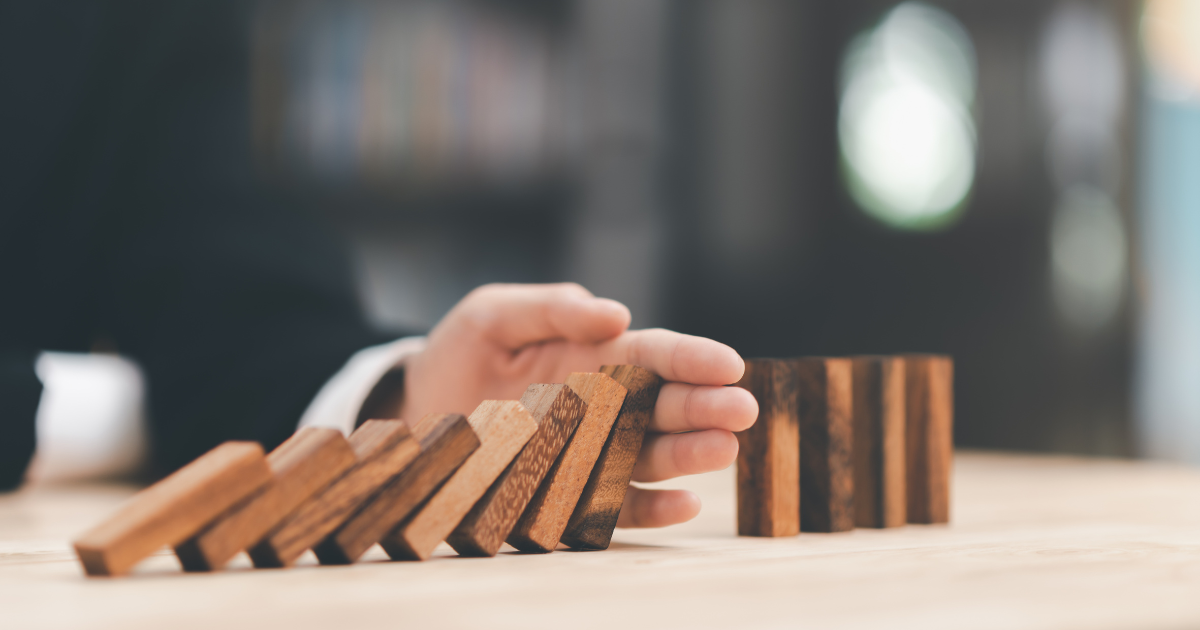
The feasibility phase is not a formality to be checked and filed. It is the phase that determines whether a spa is sized correctly for its market. Whether the concept matches the guest. Whether the programming is commercially viable. Whether the space can be operated at a profit, or whether it will become, as so many spas do, a beautiful amenity that quietly drains the property year after year.
What I have observed, over and over again, is that the projects that invest in genuine feasibility work early are the ones that avoid the three most costly outcomes in wellness development: overbuilding, misalignment between concept and guest, and chronic underperformance.
Each of those outcomes is preventable. All of them are significantly harder to reverse once the walls are up.
I was sitting across from a developer last year, a sharp, experienced person who had built remarkable things. Hotels, residences, mixed-use projects across three continents. He slid a set of architectural drawings across the table and asked me what I thought of his new wellness facility he showed me.
The renderings were beautiful. Warm stone, generous volumes, a thermal area that looked almost meditative on the page. The lighting had been considered. The materials were clearly premium. Someone had invested real creative energy into the vision.
I looked at him and asked, "When did the architect join the project?"
"About eight months ago," he said.
"And when did you first speak to a spa consultant?"
He paused. "You're the first."
The architect had already committed to 420 square metres of spa, saying wellness would be too pushed. The treatment rooms had been positioned. The thermal circuit had been drawn. The mechanical shafts had been located. Eight months of decisions had been made without a single conversation about how the space would actually operate, what it would cost to run, who it was designed for, or whether it made commercial sense at all.
That conversation is one I have had more times than I can count. It is why I believe that feasibility - true feasibility - is the most undervalued discipline in spa and wellness development. And it is why I want to walk through exactly what that discipline looks like, and what it protects against.
The sequence matters enormously. In most hotel and resort development projects, the spa consultant is invited to the table after the architect has already shaped the space. This is not a criticism of architects; it is simply a structural problem in how development projects are organised.
Architects design space. They think about volume, light, flow, proportion, and material. They do this extraordinarily well. But they are not trained to think about treatment room ratios, thermal plant capacity, back-of-house operational flow, revenue per square metre, or the hiring implications of a wet area that requires specialist maintenance every quarter.
These are not decorative considerations. They are the foundations upon which a spa either becomes a genuine asset or a permanent cost centre.
What should happen before the architect draws a single line? A strategic wellness brief. This document, developed with a spa consultant who understands both operations and commercial reality, defines the following with precision:
Who is the guest, specifically? Not broadly 'wellness travellers' but a defined profile with defined expectations and defined spending behaviours.
What is the positioning of this wellness facility within the broader property and competitive landscape?
What size of facility is genuinely appropriate for this property, this location, and this demand?
What is the revenue model: treatments, thermal, retail, membership, F&B integration?
What are the operational requirements that must be embedded in the architecture from the outset?
When a spa & wellness consultant contributes at the briefing stage, the architect receives a document that makes their work more precise, not more constrained. The design becomes purposeful rather than aesthetic. It becomes a space built to be operated, not only admired.
The cost of skipping this step is not abstract. It manifests in treatment rooms that are slightly too small to accommodate a double bed correctly. In relaxation lounges that are treated as leftover space. In thermal circuits that feel disconnected because the guest journey was never mapped before the walls were drawn. These are not problems you can fix with a renovation. They are baked into the building.
Over the years we have witnessed that most feasibility conversations in spa and wellness development focus on the wrong numbers. Owners and developers scrutinise construction costs, equipment budgets, and fit-out timelines. These are the visible numbers, the ones that appear in line items and require sign-off.
The numbers that are rarely interrogated are the operational ones. And in my experience, it is the operational numbers that determine whether a wellness facility survives its first five years.
Revenue per treatment hour is the fundamental unit of a spa's commercial performance. It tells you not simply how much a treatment costs, but how efficiently your therapist's time, your single largest cost, is being converted into revenue. A spa can have a beautiful menu and a full appointment book and still be underperforming on this metric. This number needs to be modelled before the facility opens, not after it has been operating at a loss for two years.
Staffing ratios are equally critical and almost always underestimated in development feasibility documents. A thermal suite requires supervision. A wet area requires maintenance. A high-volume facility requires reception coverage across split shifts. These are not optional costs; they are the non-negotiable infrastructure of a safe, well-run facility. And they must be costed at realistic local labour rates, not optimistic projections.
The break-even horizon is another number that deserves honest examination. A luxury spa in a five-star hotel typically takes eighteen to thirty-six months to reach operational maturity. There are exceptions, of course, a perfectly timed opening, an exceptionally strong pre-existing client base, a location that generates immediate demand, and those exceptions are worth celebrating. But they are not the norm, and building a business plan around them is a risk few owners fully appreciate. For the majority of operations, eighteen to thirty-six months is not a failure. It is the reality of building a client base, training a team, and establishing a reputation. But if an owner expects profitability in month four, the facility will be placed under pressure that distorts every operating decision, from staffing levels to menu pricing.
There is also the question of what I call the invisible cost of the wrong concept: the revenue that does not exist because the facility was designed for the wrong guest, in the wrong format, at the wrong price point. This cost never appears on a P&L, but it is real, and it compounds every year.
A genuine feasibility study, one worth commissioning, models these operational realities with specificity. It does not produce a generic template with optimistic occupancy assumptions. It produces a picture of what this spa and wellness facility, in this property, with this concept, will actually cost to run and what it will realistically generate. That picture may not always be comfortable. But it is always more valuable than a beautiful rendering.
The most important thing I can say in this article and I am aware it is not what the industry typically wants to hear. Not every hotel needs a spa.
For many years, the assumption has been that a four or five-star hotel requires a spa as a matter of category. It has become an expected amenity in the way a restaurant or a fitness room is expected. And so hotels build spas because their competitive set has spas, because their brand standard requires a spa, because a consultant once told them that a spa would increase room rates.
Some of these reasons are valid. Some are not. And none of them is a substitute for a genuine analysis of whether a spa or wellness space, in its full commercial and operational complexity, is the right investment for a specific property at a specific moment.
I have worked with properties where the honest answer was not a traditional spa. It was a world-class thermal bathing facility with no treatment rooms, because the local market was underserved in that dimension and the footprint could not support both a thermal circuit and a treatment suite at the level of quality the brand required. I have worked with properties where a recovery and performance space was far more aligned with the guest profile than a candlelit treatment room. I have seen boutique hotels invest in exceptional sleep programming, in-room wellness rituals, and wellness-integrated F&B, and outperform their competitors who built expensive spas they could not staff.
The question is not 'do we build a spa?' The question is: 'what form of wellness investment will genuinely serve this guest, strengthen this brand, and return value to this asset?'
Those are different questions. And they require different conversations.
The wellness landscape in 2026 is broader and more sophisticated than it has ever been. Longevity programming, recovery-focused spaces, thermal wellness, biophilic design, sleep optimisation, movement and breathwork, there are now many ways to create meaningful, differentiated, commercially viable wellness experiences that do not necessarily begin with a spa floor plan.
The developers and owners who understand this are not the ones who build less. They are the ones who build better. Because they ask better questions at the beginning.
The most strategic wellness decision a developer can make is the one they make before any design begins.
We see feasibility not as a document, but as a discipline. It is the willingness to ask difficult questions before capital is committed and to understand not just what you want to build, but what the market needs, what the operation demands, and what the guest will truly value.
The spas that endure, the ones that become genuine destinations, that build loyal communities, that contribute meaningfully to the properties they inhabit, are almost always the ones where someone asked those questions early enough to act on the answers.
The strongest wellness concepts begin with clarity. And clarity, in my experience, begins with the right conversation. So let’s have these conversations!
Verena Lasvigne is the founder of VLF Spa Consulting, an international spa and wellness consultancy based in France and working worldwide.She partners with hotel owners, developers, investors, architects, interior designers and operators to create, reposition and elevate luxury spa and wellness destinations. Her work spans the full arc of a spa project: market analysis and competitive benchmarking; feasibility studies and financial projections; spa and wellness concept creation; spa design guidance, functional zoning and design briefs for the architecture and interior design team; treatment menu and wellness programming development; retail and revenue strategy; spa project management through delivery; pre-opening planning and team training; and operational performance once the doors are open.With more than 20 years in luxury hospitality and spa operations, she has led spa teams and spa development projects across Europe, the Middle East and North Africa. The argument running through this blog is the one she brings to every project: a spa has to be more than beautiful. It has to be differentiated, operationally realistic and profitable. A concept that photographs well but cannot be staffed, run or priced is not a concept, it is a decoration.